Hot water failing is listed among urgent repairs, because it is failure of an essential service. So a tenant here is not stuck waiting indefinitely, and that is worth knowing.
What is worth knowing next is that the repair-or-replace question, which is normally a purely technical one, has a practical edge in a rental. A repair is a job of a size a tenant may realistically be able to arrange under the reimbursement provisions. A replacement is a different order of expense, and it is squarely an owner's decision.
Loss of hot water is failure of an essential service and is treated as an urgent repair. Contact the landlord or agent first, or make a reasonable attempt to, because that is a condition of reimbursement. Where the fault is an element, a thermostat or a valve, a repair is a proportionate job. Where the unit has failed outright, that is a replacement, and replacing a landlord's asset is the owner's decision rather than the tenant's.
- Contact the landlord or agent, and keep a record of doing it
- Ask for the fault to be diagnosed before anybody talks about replacement
- A repair to an element, thermostat or valve is a proportionate job
- A whole-unit replacement is an owner decision, not a tenant one
- Keep the itemised invoice with the licence number on it
On this page
1. Why hot water counts as urgent
The urgent repairs provisions cover failure of an essential service, and hot water is one. That is why it sits in a different category from, say, a dripping tap, which is ordinary maintenance for the landlord to attend to in the normal course.
What that means practically is that a tenant is not simply waiting for a reply. There is a pathway, and the first steps on it are contacting the landlord or agent and giving them a reasonable opportunity to deal with it. Those are conditions of reimbursement, not formalities, and skipping them costs the tenant money.
This is about what to do when you cannot reach anybody, not a suggestion that nobody will answer. Ring, message, and give it a reasonable chance first.
2. The technical question, which is genuinely a question
Plenty of hot water failures are repairs. On a storage system the common ones are a failed element or thermostat, a spent sacrificial anode, or a valve. Sydney's water is soft, so the things that end tanks in hard-water regions are not the story here.
A repair is a defined job with a defined cost, and it is proportionate to what a tenant might reasonably arrange in an urgent situation.
Some failures are not repairs. A leaking storage tank is the end of that unit, and no amount of goodwill changes it. That is a replacement, and a replacement is a different order of expense entirely.
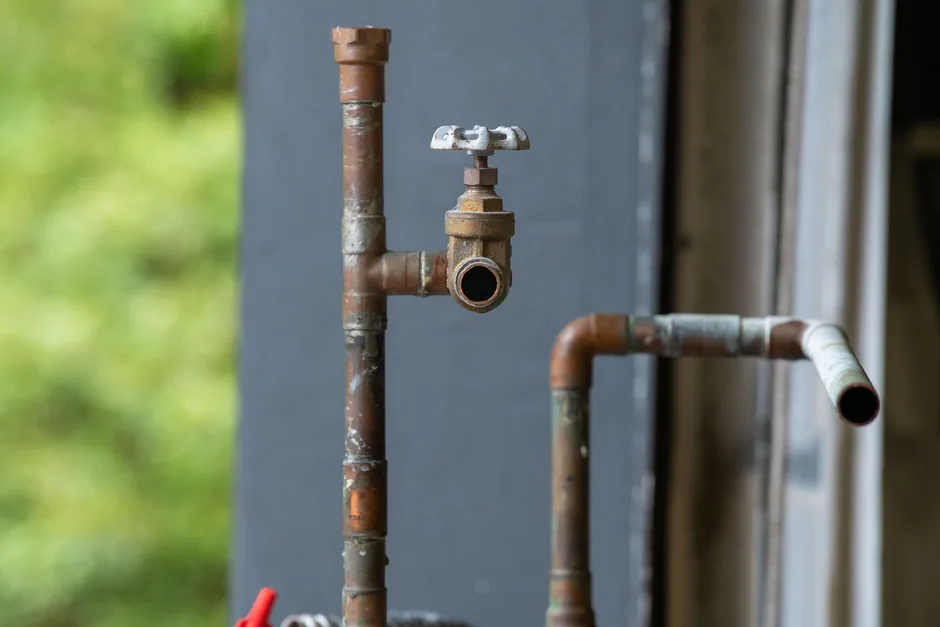
3. Why that distinction matters more in a rental
In an owner-occupied house the repair-or-replace question is about money and sensible timing. In a rental it also decides who can practically act.
Reimbursement for an urgent repair a tenant arranges is capped, at up to $1,000. A repair may sit within that. A whole-unit replacement will not, and beyond the number, replacing a hot water system is replacing the owner's asset. That is an owner decision, and a tenant should not be put in the position of making it.
So the useful first step is diagnosis rather than a quote to replace. Establishing whether this is an element or a dead tank tells everybody, tenant and owner alike, what kind of decision they are actually making.
No hot water and nobody answering?
We will diagnose it and tell you plainly whether it is a repair or a replacement.
4. What to ask a plumber for
- Diagnose it before quoting a replacement. Find the compliance plate, read the age, and identify the actual fault.
- Quote the repair, where a repair is genuine. Not as a favour, as the honest answer.
- Say plainly when it is not repairable, and why, so the owner has something to act on.
- Itemise the invoice, with the licence number and ABN on it.
- Put the fault in writing, not just the work. What was wrong matters as much as what was done.
- Photograph what was found, which we will do if asked at the start.
That list is equally useful to an owner. An owner receiving a clear diagnosis and an itemised repair quote is in a far better position than one receiving a single line saying the system needs replacing.
5. If it genuinely is a replacement
Then it moves to the owner, and the sensible thing a tenant can do is make that straightforward rather than adversarial.
Pass on the written diagnosis and the photographs. An owner who can see what the plumber saw can make a decision quickly. An owner receiving a demand with no supporting information reasonably wants to check it first, and that costs days.
We invoice the person who arranged the work, because the provisions require the tenant to have arranged it for the reimbursement pathway to apply. We will not promise you that a landlord will pay, because that is between you and them and it depends on conditions none of us control. What we will do is give you paperwork that supports the claim properly.
6. Where to check the tenancy side
Everything here about the tenancy provisions is a general description. NSW Fair Trading and the Tenants' Union of NSW are the authorities on how they apply to a particular situation, and they are worth asking rather than working it out from a plumbing website.
Our part is narrower and more concrete: attend, diagnose honestly, repair where a repair is real, and hand over paperwork with a licence number on it. The licence matters here for a specific reason, covered in our guide on urgent repairs a tenant can arrange.
- Loss of hot water is failure of an essential service and is treated as an urgent repair.
- Contact the landlord or agent first, or make a reasonable attempt. It is a condition.
- Elements, thermostats, anodes and valves are repairs. A leaking tank is not.
- Reimbursement for a tenant-arranged urgent repair is capped at up to $1,000.
- Replacing the unit is replacing the owner's asset, so it is the owner's decision.
- Ask for diagnosis before any replacement quote, and get the fault in writing.
No hot water, renting FAQs
Is no hot water really urgent?
It is treated as failure of an essential service, which is among the urgent repairs. That is the general position; whether it applies to your particular situation is worth confirming with NSW Fair Trading or the Tenants' Union.
Can I just get the system replaced myself?
Replacing a hot water system is replacing the owner's asset and it is an owner decision. Beyond that, a replacement is a different order of cost from a repair. The useful step a tenant can take is getting it diagnosed so the owner can decide quickly.
What is usually wrong with a hot water system here?
On a storage unit, most often an element, a thermostat, a valve or a spent sacrificial anode. Sydney's water is soft, so the scale that finishes tanks in hard-water regions is not the story. A good proportion of these are repairs.
Will the landlord definitely reimburse me?
We are not going to promise that, because it depends on conditions we do not control and it is between you and them. What we can do is make sure the paperwork supports a claim: licensed tradesperson, itemised invoice, written diagnosis.
Should I contact the agent even at 9pm?
Yes. Ring and message. Notice, or a reasonable attempt at it, is one of the conditions, and a message creates a record that the attempt was made. Most agents respond properly, and this is about what to do when you cannot reach anyone.
The unit is old. Does that change anything?
It changes the technical answer more than the tenancy one. We will find the compliance plate and tell you the actual age, because a young system with a failed component is worth repairing and one deep into its life is a different conversation for the owner.